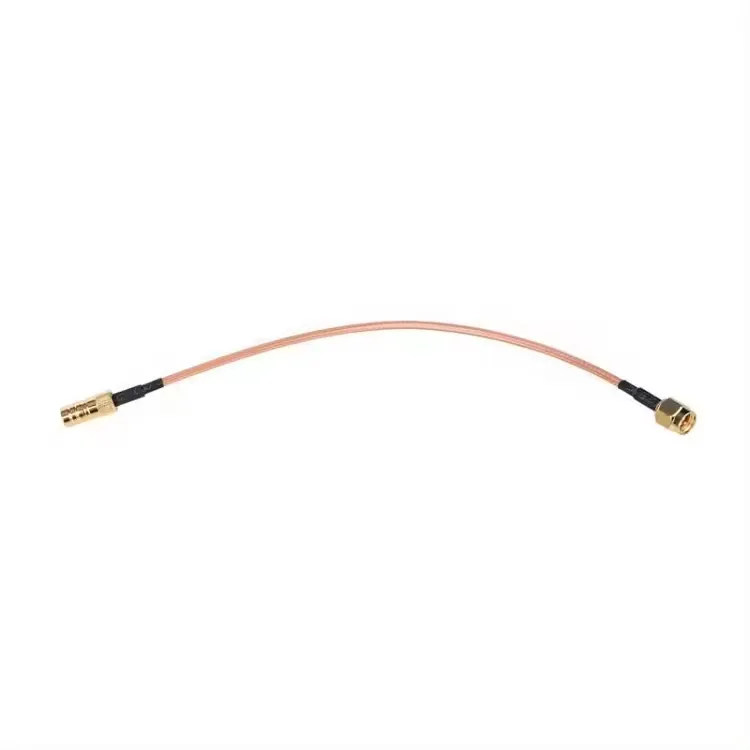

Laser Sensor Cable
Shielded signal and sensor cables for capacitive height controllers and cutting-head interfaces. Standard lengths in stock, with M8 or M12 connectors and pinouts matched to your controller on request.
What the sensor cable carries, and why it is not just wire
The capacitive height control loop runs from the ceramic ring and the head body, up through the head, and back to the controller as a very small signal. The cable in that loop is not carrying power; it is carrying a measurement. That is why a cable that looks fine, has continuity on a meter, and still causes height faults is one of the most common and least believed failures in a cutting shop.
Shielding is the whole point. The loop sits next to a switching power supply, a servo drive, and a high-frequency ignition, and it is trying to resolve a capacitance change caused by a millimetre of standoff. Once the shield is broken or the drain wire is floating, the controller starts reading noise and the head starts hunting.
Where these cables actually fail
Almost never in the middle of a straight run. They fail at the three places where the cable is asked to do something:
- In the drag chain. Continuous flexing breaks strands inside the conductor long before the outer jacket looks worn. The symptom is intermittent, and it usually appears at the same place in the program.
- Near the head. Spatter, radiant heat and the occasional crash burn or crush the last 200 mm. This is the section that should be inspected first, not the controller end.
- At the connector. Coolant ingress and pin corrosion change the contact resistance, which the controller reads as a drifting height.
Matching the connector to the controller
| What to confirm | Why it decides the part | What we need |
|---|---|---|
| Connector size | M8 and M12 are both common on height controllers and head interfaces; the wrong shell will not seat or seal | Photo of the socket, or the controller model |
| Pin count and pinout | Same shell, different wiring is the classic wrong-part scenario | Controller make and model, or the old cable's pin arrangement |
| Cable length | Long runs add capacitance and pick up more noise; length should match the machine, not be extended | Measured length along the drag chain |
| Jacket and flex rating | The drag-chain section needs a continuously flexing cable; a standard cable will fail in weeks | Whether the run is in a chain or fixed |
| Shield termination | A shield that is not bonded at the controller end is decorative | How the old cable's shield was landed |
Symptoms you can diagnose without a scope
| Symptom | What it points to | First check |
|---|---|---|
| Height fault at the same point in every program | Broken strands at a specific drag-chain bend | Flex the cable by hand at that point while watching the height readout |
| Standoff drifts over a shift | Connector resistance changing with temperature or coolant | Reseat and inspect pins for corrosion or moisture |
| Alarm appears when the head moves, disappears when still | Shield or conductor damaged in the moving section | Swap in a known-good cable before touching parameters |
| Head oscillates in height on thin sheet | Noise on the signal, or gain set against a bad signal | Cable and shield first, then controller gain |
| Works cold, fails after an hour | Thermal expansion opening a partial break | Check the run near the head where radiant heat is highest |
Replacing a cable properly
Route the new cable along the same path as the old one, keep the bend radius generous in the chain, and land the shield exactly as the original was landed. Then run a test cut at the thickness that normally shows the fault. A cable that is fitted correctly and still faults is usually a controller or ring problem, and knowing that saves a second cable.
Supply
We keep shielded signal and sensor cables for capacitive height controllers and cutting-head interfaces in standard lengths, with M8 or M12 connectors, and match the pinout to your controller on request. Tell us the controller model, the length you need and whether the run is in a drag chain, and we will confirm the variant. Wholesale and OEM supply available.