
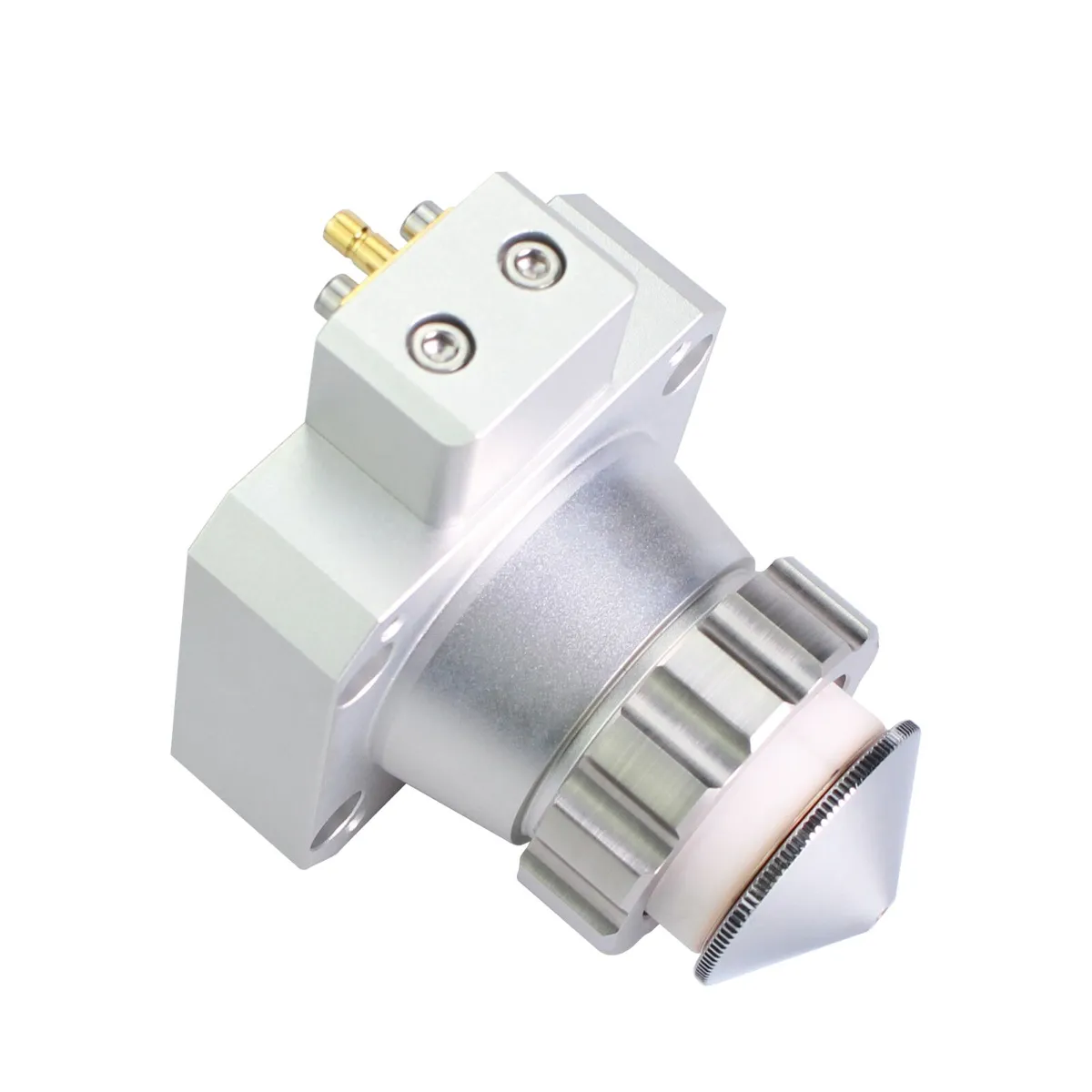

Laser Cutting Parts
Ceramic rings, body insulators, retaining caps, O-rings and seals for common fiber cutting heads. Overhaul kits group the wear parts for one head family, so a full rebuild ships as a single line item.
First, what we mean by parts
This page is about the wear parts and consumables that sit inside a laser cutting head: ceramic rings, body insulators, retaining caps, O-rings and seals. We are a supplier of these parts, not a laser cutting job shop. If you are looking for someone to cut sheet metal to a drawing, we are the wrong supplier; if you are looking for the parts that keep a cutting head running between services, this is the right page.
That distinction matters in practice. A head that fails because a two-dollar O-ring dried out and let coolant into the optics is not a service case, it is a stocking problem.
The wear ladder inside a cutting head
Wear inside a head follows a fairly predictable order, and each step damages the one after it if it is ignored:
- Ceramic ring and body insulator. They isolate the capacitive sensing from the head body. A cracked ring does not stop the machine cutting; it stops the height control, which is worse because the operator then runs with the head too high.
- Retaining cap. It holds the nozzle and the window in place. Once it has been hit in a crash, it rarely seats straight again.
- O-rings and seals. They keep coolant and shop air where they belong. A dried seal leaks slowly into places you cannot see until an optic dies.
- Nozzle and protective window. The two parts that are meant to be consumed, and the two that hide damage to everything above them.
What we stock, and how each one presents
| Part | How failure usually presents | What it takes down with it |
|---|---|---|
| Ceramic ring | Height faults, drift, alarms on thin sheet, visible crack or chipped rim | Height control stability; sometimes the ring seats on the nozzle and damages it |
| Body insulator | Erratic capacitance readings, faults that appear after a crash | The whole sensing loop |
| Retaining cap | Nozzle not sitting square, window not sealing, gas leaking at the joint | Cut quality and gas consumption |
| O-rings and seals | Coolant weep, mist inside the head, condensation on optics | Protective window and focus lens |
| Overhaul kit | Not a failure item: the set you fit when a head is stripped for service | Nothing, if it is on the shelf before the service |
Replace, or investigate further
| Situation | What to do |
|---|---|
| Height faults started the same day as a crash | Replace ring and insulator together; inspect the cap as well |
| Height faults with no crash, on one machine only | Check the cable and shield before buying parts |
| Window keeps hazing even after replacement | Look for a leaking seal or a coolant weep, not another window |
| Nozzle will not run concentric after replacement | Check the retaining cap and the seat, not the nozzle batch |
| Head stripped for a scheduled service | Fit the full overhaul kit rather than the one part that looks worn |
Why kits are worth keeping on the shelf
A head overhaul is usually planned the moment a machine goes down, which is the worst moment to discover that one O-ring size is missing. Grouping the wear parts for a head family into one kit turns four line items and four chances of a wrong size into one part number that is either on the shelf or is not. For distributors, the kit is also the easiest thing to sell: it maps directly to a service interval rather than to a diagnosis.
Ordering
Tell us the head family and what you are replacing. If you are not sure whether the ring or the insulator is at fault, send a photo of both and we will tell you what we would change. We supply individual parts and kits in wholesale quantities, under OEM packaging where required, and we can build the kit around the head families you actually run rather than a generic list.